
Co-leading an Organization
2:2 coaching to support the relationship between two leaders.
Background
This engagement involved the co-leaders of a rapidly growing organization navigating the opportunities and strain that often accompany success. As the organization expanded - adding staff across all levels of leadership, complexity, and external visibility - the co-leaders found themselves returning to the same conversations, struggling to align, and feeling surprised that leadership felt harder at this stage than ever before.
At the outset, they named a desire to re-establish trust, communicate with greater ease, and reduce the stress they were generating for one another in the course of daily work.
We partnered with these co-leaders through 2x2 Coaching, a structured, relational coaching model that treats the relationship itself as the client. We set out to support this leadership pair to surface patterns, repair trust, and build strategic and relational alignment.
The Challenge
As the organization scaled, the co-leaders experienced a growing gap between intention and impact. While both were deeply committed to the mission and to the organization’s success, their working relationship had become strained.
They named several interrelated tensions:
Difficulty sharing feedback without triggering defensiveness, withdrawal, or escalation.
A cycle of repeated conversations that did not lead to decision-making or sustained change.
Frustration around overlapping portfolios and unclear ownership on work streams.
Stress-driven communication patterns that made disagreement feel risky - especially in front of staff.
A felt sense that trust had been compromised, even when neither leader intended harm.
Externally, pressure was mounting. Staff needed clarity. Stakeholders expected coherence. Internally, both leaders felt the weight of responsibility and the belief that "it should be getting easier by now."
WBT’s diagnosis surfaced a stuck dynamic: moments of misalignment quickly activated stress responses, reduced emotional intelligence, and reinforced habits of blame, withdrawal, or control. Without intervention, the relational strain risked cascading into organizational systems, decision-making, and culture.
The central question was not whether either leader was capable, but whether they could interrupt entrenched patterns and rebuild trust, accountability, and clarity together.
Our Approach
Through ongoing 2x2 Coaching, we created a protected, structured space for the co-leaders to work on the relationship as critical organizational infrastructure.
The coaching has focused on two core developmental goals:
Building productive conversation norms and routines by strengthening advocacy and inquiry - helping each leader clearly express perspectives while staying genuinely curious about the other.
Moving from blame to accountability, enabling both leaders to see and take responsibility for their contribution to relational and organizational dynamics.
We’ve observed the leaders in real-time conversation, surfaced patterns while we listen, and introduced small, supported experiments to shift how they engaged with one another.
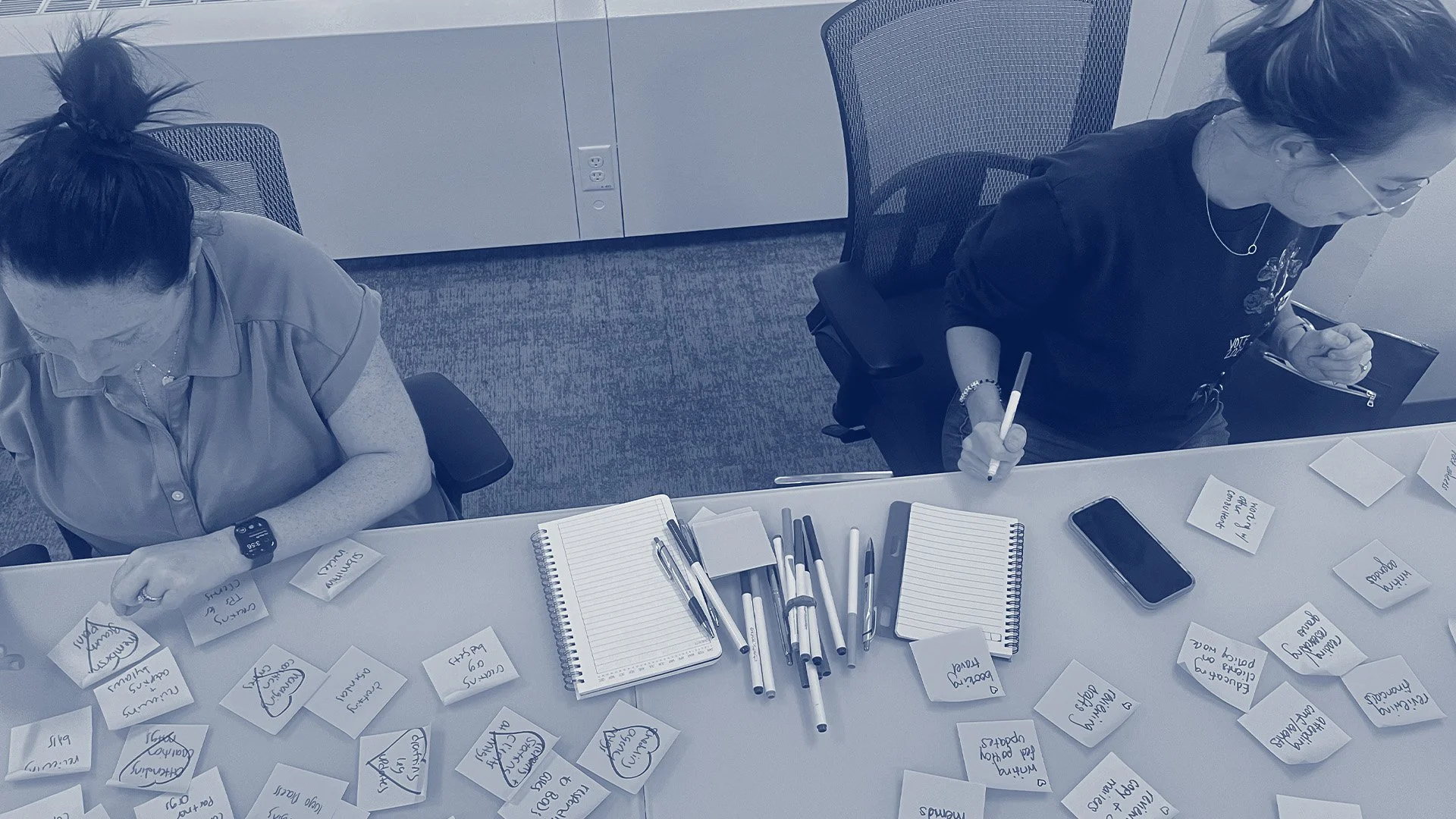
One element of the engagement was our Co-Leadership Role Clarity Process, which brought structure to both relational and operational alignment:
1. Individual Reflection
Each leader reflected on core responsibilities, strengths, energy drivers, and areas of strain, surfacing where they felt overextended, underutilized, or unclear.
2. Shared Vision and Strengths Mapping
Coaching sessions re-centered the purpose of co-leadership itself. Together, the leaders explored why co-leadership exists in this context, what they hoped it would enable, and how their distinct strengths, values, and working styles could be complementary rather than conflicting.
3. Role Definition and Decision Authority
Using clear buckets of work, the leaders clarified primary and secondary ownership, decision rights, and expectations, reducing ambiguity that had previously fueled stress and rework.
4. Operating Agreements and Repair Practices
The leaders established explicit agreements for communication, feedback, disagreement, and capacity signaling. Drawing on Action Design and the Cycle for Repairing Harm, they practiced naming impact, listening without defense, and making small, concrete acts of repair.
Rather than aiming for perfection, the work emphasized awareness, accountability, and iteration, recognizing that co-leadership requires ongoing attention as conditions change.
Impact and Early Outcomes
Because this engagement is ongoing, outcomes continue to unfold. Early shifts include:
Reduced duplication of effort and fewer missed handoffs.
Clearer signals to staff about leadership ownership and accountability.
An improving sense of trust and partnership between the co-leaders.
Perhaps most importantly, the co-leaders reported feeling less alone. The 2x2 Coaching space gave them permission to step out of constant execution mode and invest in the health of their relationship.
Investing in the Relationship Matters
Co-leadership can be a powerful model for equity, sustainability, and shared power, but only when it is intentionally designed and continually refined. This case illustrates that clarity is not a constraint, but rather, it is what allows co-leaders to lead with generosity, confidence, and impact.
When leadership pairs invest in how they work together, they don’t just strengthen their partnership, they strengthen the entire organization.For organizations operating in similarly demanding contexts, Empower Project's experience underscores the importance of proactive leadership development and support. Engaging with coaching programs like the one we built for the Empower team can be a strategic move to enhance team resilience and effectiveness.
Ready to explore how leadership coaching can benefit your team or organization?
Click the button below to book a no-strings exploratory call.