
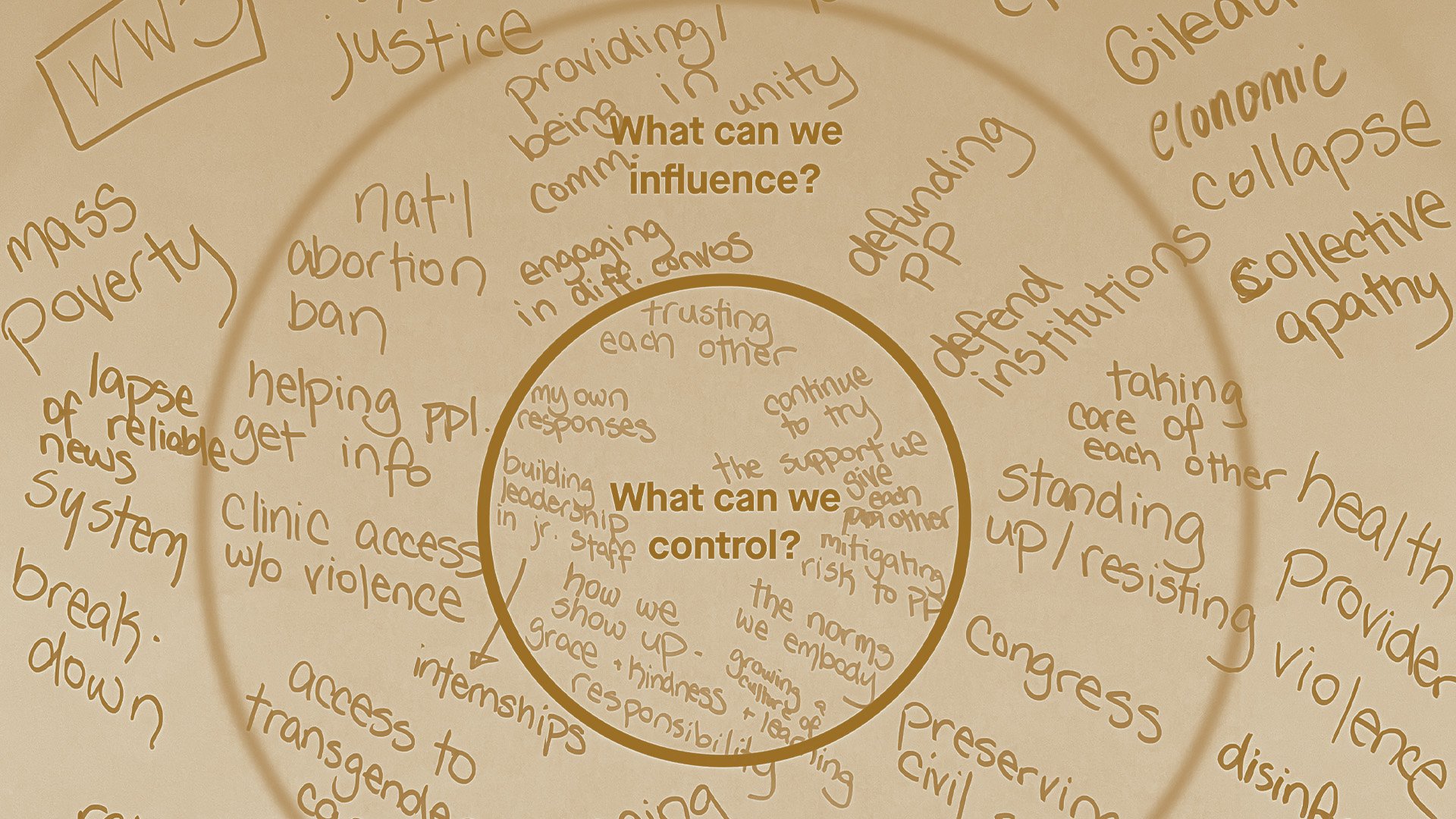
Developing Endurance and Agency
1:1 coaching with a senior leader to navigate relational tension.
Background
A senior leader at a mid-sized nonprofit came to Women’s Brain Trust carrying a familiar but heavy load. They were deeply committed to the organization’s mission and proud of the impact their team delivered, but their daily experience of leadership had become increasingly strained.
At the center of that strain was their working relationship with the Executive Director—a bold, visionary leader with outsized influence and ambition, but limited emotional intelligence who struggled to see the impact of their behavior on others. Communication was blunt. Feedback felt one-directional. Emotional undercurrents went unnamed. Over time, this dynamic created stress, eroded trust, and folks felt responsible for buffering their teams from unnecessary harm.
The client wasn’t asking, “How do I survive?” They were asking something more nuanced and courageous: How do I lead well in this context without losing myself, or the people I care about?
The Challenge
The challenge was not a lack of skill or commitment. It was the collision between values and reality.
The client was navigating:
A power dynamic where honest upward feedback felt risky.
Recurring interpersonal tension that drained energy and focus.
A growing sense of burnout and disillusionment with how the work was being done.
An unspoken question: Is the stress we’re carrying actually necessary?
They had already tried working harder, adapting their communication, and “managing up.” What they needed was not advice or a playbook, but a reflective space to think, practice, and choose differently.
Our Approach
We partnered with the client through a structured, relational coaching process grounded in deep listening, thoughtful inquiry, and real-time application. Rather than offering solutions, we focused on strengthening the client’s capacity to see patterns, test new approaches, and act with intention.
Over 12 sessions, our work centered on three interconnected arcs:
1. From Reaction to Reflection
Early sessions created space for the client to slow down and name what was actually happening, both internally and relationally. Together, we explored how stress was showing up in their body, decision-making, and leadership presence. This reflective pause helped the client shift from constant reaction to a more grounded, strategic stance.
2. Practicing Courageous, Regulated Communication
Coaching became a laboratory for experimentation. We practiced difficult conversations, clarified boundaries, and refined language that aligned with the client’s values while acknowledging the realities of power. Between sessions, the client tested these approaches in real interactions, then returned to reflect, adjust, and integrate what they were learning.
This cycle (experiment, reflect, apply) helped build confidence and emotional agility, even when outcomes were uncertain.
3. Expanding the Frame: From Individual Coping to Organizational Health
As the client’s clarity grew, so did their sense of agency. What began as a focus on one relationship evolved into a broader insight: the organization lacked shared values and working norms that protected against unnecessary stress, burnout, and mission drift.
With coaching support, the client began to advocate not just for themselves, but for an organizational reset. They initiated conversations about values, expectations, and how leaders wanted to work together. This reframed the issue from a “difficult leader” problem to a collective leadership opportunity.
Outcomes and Shifts
By the end of the coaching engagement, the client reported meaningful shifts:
Greater self-trust and emotional regulation in high-stakes interactions.
Increased clarity about what was theirs to hold—and what was not.
More direct, grounded conversations with the Executive Director.
The courage to name patterns affecting morale and sustainability.
A renewed sense of alignment with the mission, rooted in how the work could be done, not just what the work achieved.
Perhaps most importantly, the client moved from endurance to agency, no longer absorbing stress as inevitable, but actively shaping conditions for healthier leadership and culture.
Reflection
This engagement underscores one of our core beliefs: leadership growth doesn’t come from working harder or learning the “right” script. It comes from creating space to reflect, practice, and act with intention.
Coaching didn’t fix the organization. It strengthened a single leader’s capacity to meet complexity with clarity, courage, and care. And that shift created ripples far beyond a single relationship.
Ready to explore how leadership coaching can benefit your team or organization?
Click the button below to book a no-strings exploratory call.