The Partnership
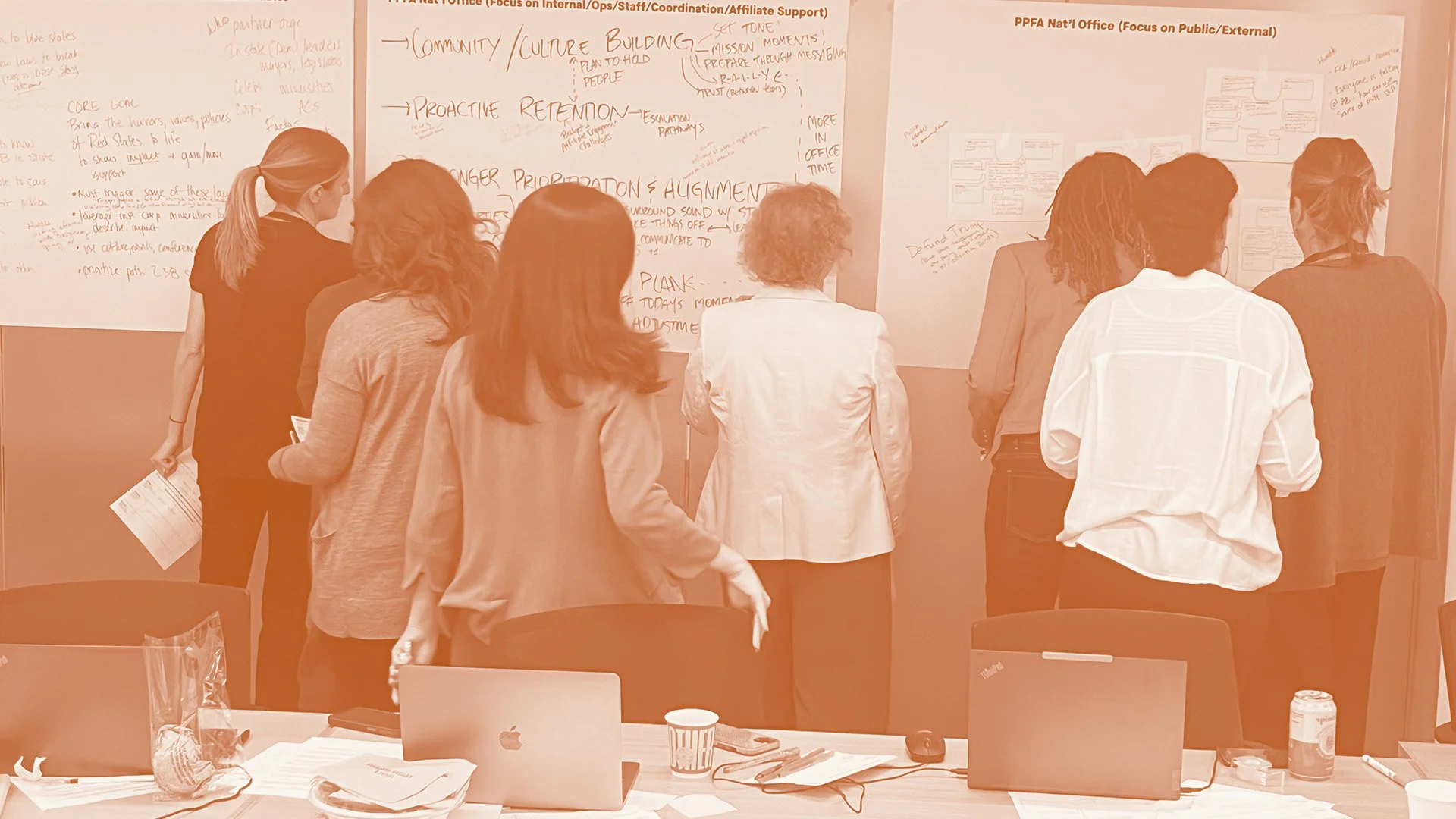
We recently had the privilege of facilitating conversation and interaction with a 40+ person cross-functional leadership team at Planned Parenthood Federation of America (PPFA). The engagement began as the organization faced looming uncertainty with the U.S. election on the horizon.
Key TakeawayThree facilitated scenario-planning days helped a 40-person leadership team prepare emotionally and operationally for uncertainty—pressure-testing plans and clarifying how they’d decide together under crisis.
The Challenge
Navigating Complexity and Tension
PPFA leadership team members were juggling the complexity of cross-team communication, collaboration, and a pressing need to unify their organizational readiness and scenario planning efforts. As one leader shared, “We needed a moment to pause for engagement (in the planning process).”
Their goals were clear but complex:
- Firm up and pressure test their public/external plans for multiple election outcomes.
- Clarify decision-making and communication norms.
- Foster collaboration and trust across the range of internal stakeholders representing unique bodies of work.
- Prepare both emotionally and operationally for potential post-election crises.
Our Approach
What We Did to Create Space and Structure for Engagement
Facilitated a Series of Thoughtfully Designed Scenario Planning Sessions
We facilitated three full-day sessions over the course of six months, starting with emotional grounding and moving into structured ideation and planning. Participants worked through:
- Emotional intelligence exercises to address their own fear and uncertainty.
- Circles of Influence and Control frameworks to clarify where action was possible.
- Ideation and strategy sprints to generate ideas and prioritize initiatives.
Explored Cross-Functional Collaboration
We used methodologies like productive conflict modeling, explorations of stress and window of tolerance, and cross-functional fishbowl discussions. These created new levels of understanding and trust between historically siloed teams.
Focused on Alignment and Accountability
We established space for synthesis and decision-making to move beyond conversation and into planning for action.
The Results
By the end of the sessions, the group had:
- Aligned on key strategies for both election scenarios.
- Created a shared language and understanding of organizational readiness.
- Named tension points and modeled how to productively manage them.
- Increased confidence in their collective post-election preparedness.
“This process gave us the clarity and accountability we needed. We walked out with actionable plans and a stronger sense of community across the teams.”